THE GRAVITY OF THE CENTER
In my childhood home, Sikhi wasn’t a place we visited once a week for an hour on Sundays. We weren't the "traditional" family in that sense; our devotion didn't lay in a building across town. Instead, it was the invisible center around which everything else pulled. It was the gravity of our household, a constant, quiet hum that existed in the way we spoke, the way we served, and the way we moved through the world.
For a long time, it was simply the air I breathed. I wasn’t told much about the mechanics of it; I was just told that this was the path, and I was to follow. But as I’ve grown, that "following" has shifted into something much more enlightening. While my parents built the foundation of this house, I had an older brother who showed me how to open the windows.
He was the bridge between the "must" and the "why." Through his own deep involvement, the stories of our Gurus stopped feeling like ancient history and started feeling like a map for my own future. I remember sitting with books that felt too heavy for my small hands, listening to the Gurmukhi being translated into a language a young girl could finally hold onto. It was in those quiet moments of shared study that I first truly heard the words:
ਸਾਚੁ ਕਹੋਂ ਸੁਨ ਲੇਹੁ ਸਭੈ ਜਿਨ ਪ੍ਰੇਮ ਕੀਓ ਤਿਨ ਹੀ ਪ੍ਰਭ ਪਾਇਓ ॥
Saach kahon sun leho sabhai, jin prem kio tin hee prabh paio.
"I speak the Truth, listen everyone: only those who have loved shall attain the Lord."
This quote changed everything. Growing up where religion was so "big," it was easy to get lost in the discipline. But these words simplified the world. They taught me that all the seva and all the time my family gave meant nothing if it wasn't rooted in love. It helped me realize that Sikhi wasn't a set of chores; it was a love affair with the Divine.
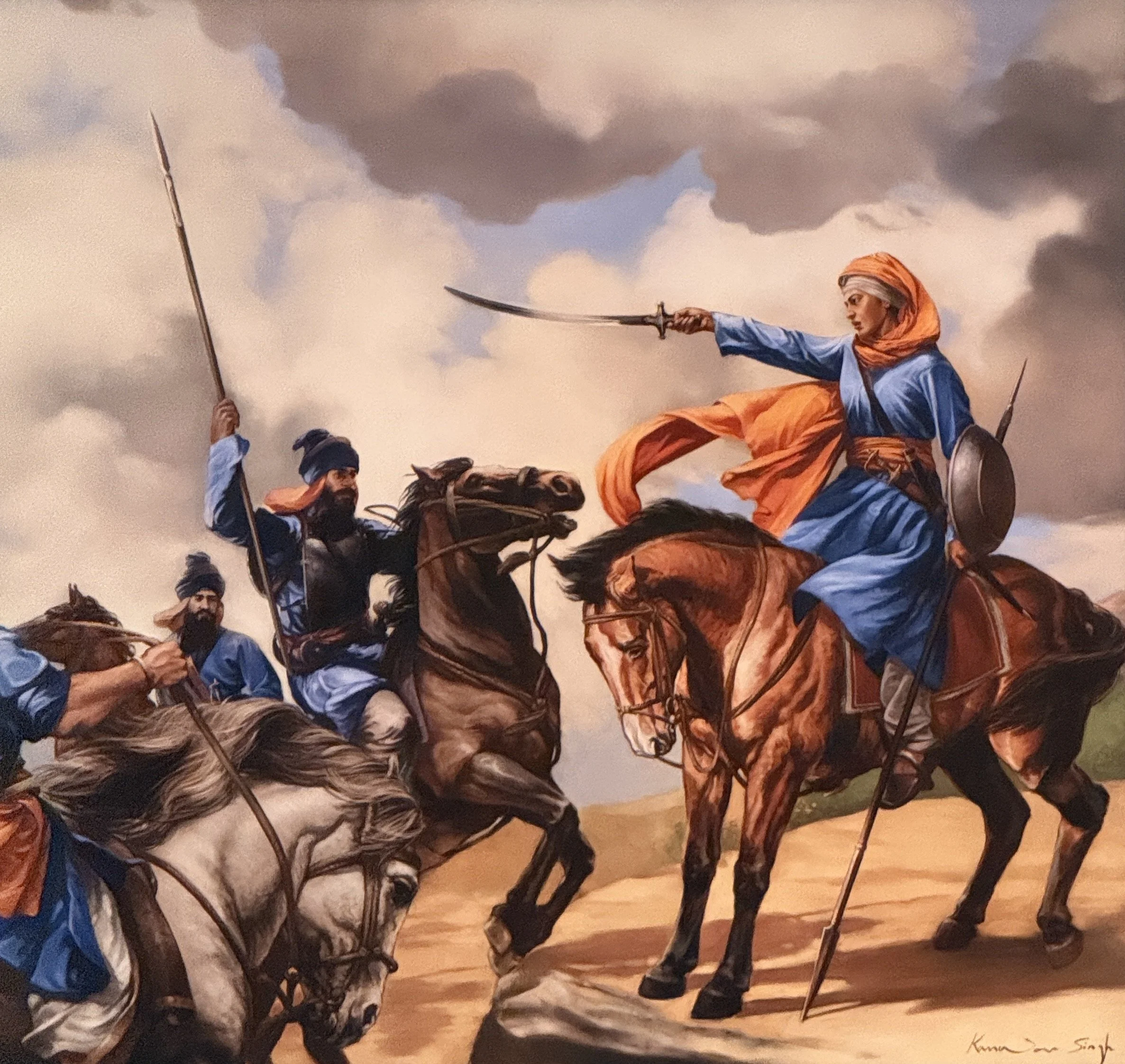
This realization became the architect of my identity as a Sikh woman. It is captured perfectly in the painting of Mai Bhago that hangs in my room—a gift from a brother who wanted me to see a warrior on my wall before I even knew I was in a battle.
Mai Bhago (Mata Bhag Kaur) was a 18th-century Sikh warrior who led 40 soldiers back to the battlefield after they had deserted Guru Gobind Singh Ji. A symbol of courage and female sovereignty, she became the Guru’s bodyguard and remains an example of the Sikh ideal: the Sant-Sipahi (Saint-Soldier).
I used to look at her, the way she held her sword, the way she commanded the space around her, and not fully understand why she was there. Now, I see the intentionality. It was a mirror placed there so I would wake up every morning and see a version of womanhood rooted in sovereignty and strength.
For years, I carried this faith because it was what was passed down. It was a beautiful weight, but it was someone else's. Now, the path has become my own. The books from my childhood have become the questions I ask today. As I seek my own discipline, I find comfort in the promise that:
ਨਾਨਕ ਸਤਿਗੁਰਿ ਮੇਲਿਐ ਪੂਰਬਿ ਲਿਖਿਆ ਪਾਇ ॥ ਸਹਜੇ ਹੋਇ ਮਿਲਾਵੜਾ ਹਿਰਦੈ ਕਪਟੁ ਜਾਇ ॥
Nanak satgur meliai purab likhia pai. Sehje hoi milavara hirdai kapat jai.
"O Nanak, by meeting the True Guru, the destiny written in the past is fulfilled. The Lord God is revealed in that heart, and ego is vanquished."
I am moving away from the faith of "because I have to" and into the faith of "because I am." I’m finally looking at that painting and realizing that I am not just an heir to a tradition. I am a participant in a revolution that is being reborn in me every single day. My destiny isn't just to repeat what was done before me, but to dissolve the ego, allowing a deeper truth to take root in my heart.
Mai Bhago and the chaali mukte painting by Kanwar Singh.